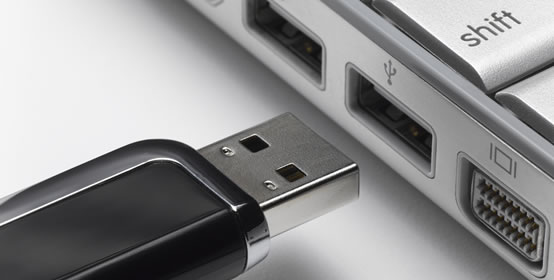
Mobile data storage keeps splitting into more directions than it used to. Flash drives, portable SSDs, encrypted hardware, and cloud storage all solve a version of the same problem, moving and protecting data outside a fixed desktop or server, but each one has moved at a different pace over the past several years. Some of that movement is about raw capacity. A lot of it is about what happens when the data gets lost or stolen.
For years, USB flash drive capacity just kept climbing, and it was reasonable to assume the next jump was always a year or two away. That's leveled off. As of 2026, 4TB is the practical ceiling for a true plug-and-play USB flash drive, offered by a small number of models like the Oyen Digital Dash Pro and Samsung's T5 EVO. Anything advertised well beyond that, the 8TB and 16TB listings that show up on marketplace sites, is almost always mislabeled or counterfeit. The 4TB ceiling isn't a marketing choice. It comes down to thermal limits, NAND economics, and the power a USB port can actually deliver to a stick-sized device without the controller overheating.
The more practical sweet spot for most professional use is still 1TB to 2TB, where drives from Kingston, SanDisk, and others have had years to mature their firmware and thermal behavior. On the speed side, USB 3.2 Gen 2 and USB4 drives now push sustained read speeds past 1,000 MB/s, which puts a well-built flash drive within range of a decent SSD. Worth noting for anyone buying in volume right now: a global NAND flash shortage, driven largely by AI data center demand, has pushed flash drive and SSD prices up through 2026, so sourcing timelines and unit costs are worth double-checking against last year's numbers.
Solid state drives used to be the expensive alternative to a traditional external hard drive. That competition is basically over. Portable SSDs built around NVMe internals and connected over USB4 or Thunderbolt now hit sequential speeds well above 3,500 MB/s, with some Thunderbolt 5 drives clearing 4,000 MB/s in both directions. That's an order of magnitude past what a mechanical external hard drive can do, and with no moving parts, portable SSDs hold up far better to the bumps and drops that come with actually carrying a drive around a job site or between offices.
The catch is that not every USB-C port delivers the same bandwidth. A drive rated for 40Gbps over USB4 will still get bottlenecked down to older USB 3.0 speeds if it's plugged into a 5Gbps port, or if the cable itself isn't rated for the full spec. For anyone speccing out storage for field engineers or technicians who need to move CAD files, scan data, or inspection records between sites, matching the drive's interface to the actual ports on the laptops or tablets it'll be used with matters more than the number printed on the box.
The original case for carrying data on a physical drive instead of the cloud was mostly about control. In 2026, that case leans more on encryption. Encrypted flash drives and portable SSDs now commonly ship with AES 256-bit hardware encryption, and the higher end of that market, aimed at defense contractors, healthcare organizations, and other regulated industries, carries FIPS 140-3 Level 3 certification. Some models unlock through NFC and a companion phone app, others through a physical keypad on the drive itself, but the common thread is that the encryption lives in hardware rather than software, which means it can't be bypassed just by pulling the memory chip out of its housing.
That distinction matters because a large share of data breaches still trace back to lost or stolen devices and mishandled credentials rather than sophisticated exploits. A drive that locks itself the instant it's unplugged, and wipes itself after a set number of failed unlock attempts, closes off a failure mode that a standard unencrypted flash drive simply can't.
Cloud storage capacity keeps getting cheaper and more available, and that trend hasn't slowed. Neither has the risk that comes with it. Industry survey data from 2025 and into 2026 consistently points to misconfiguration and identity mistakes, not exotic hacking techniques, as the leading causes of cloud breaches: exposed storage buckets, overly broad permissions, and stolen credentials account for most incidents. The average cost of a cloud-related data breach now runs into the millions of dollars once remediation, downtime, and notification costs are added up.
A useful, if uncomfortable, real-world example came out of the Oracle Cloud breach reported in March 2025, where a threat actor claimed to have exfiltrated roughly six million records tied to single sign-on and directory systems across more than 140,000 tenant accounts. Oracle initially disputed the claim, but independent researchers later corroborated enough of the leaked data to confirm a breach had occurred. It's a reminder that even large, well-resourced cloud providers aren't immune, and that the security of a company's data increasingly depends on decisions made by a vendor several layers removed from day-to-day operations.
In response, more organizations have shifted toward zero trust architecture, essentially treating every access request as unverified until proven otherwise, rather than assuming anyone already inside the network perimeter can be trusted. Adoption is still uneven. A meaningful share of enterprises report having piloted zero trust for only part of their cloud workloads, which leaves gaps that attackers are well aware of.
None of this makes physical storage obsolete, and it doesn't make cloud storage the wrong answer either. Most organizations end up running both, physical drives for fast local access and air-gapped backups, cloud storage for collaboration and long-term scale. What's changed is that the physical side of that equation now comes with its own security expectations built in, not bolted on afterward. For engineers and procurement teams speccing enclosures, connectors, and mounting hardware around mobile storage devices, whether that's a ruggedized field drive, a kiosk with a secured USB port, or a piece of equipment that needs tamper-evident access to its data ports, the hardware around the storage matters just as much as the storage itself.