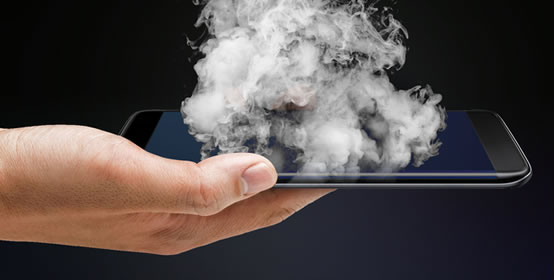
Cell phones - and the power banks, chargers, and cases that go with them - are now one of the basic necessities of modern life. Almost everyone carries one, knows how to use it, and depends on it daily. However, many people still aren't fully aware of the risk these devices carry: under the wrong conditions, the lithium-ion batteries inside them can overheat, swell, catch fire, or even explode.
This isn't old news, and it isn't limited to phones anymore. Years after Samsung's infamous Galaxy Note 7 recall first put battery fires in the headlines, the same basic problem keeps resurfacing - just across an ever-widening range of products. In 2026, the Consumer Product Safety Commission reannounced a recall of nearly 430,000 wireless portable power banks after the company received dozens of new reports of batteries overheating, swelling, or igniting - including a case in which a New Jersey woman suffered fatal burns after a power bank caught fire on her lap while charging her phone, and another in which a power bank ignited mid-flight, burning a passenger. So no, the problem hasn't gone away. The science behind why hasn't changed much either — but the scale of it has, simply because lithium-ion batteries are now everywhere.
Most battery “explosions” don't start with a dramatic external cause - the failure almost always begins inside the cell itself. The most common triggers are overcharging and physical damage, and both lead to the same underlying mechanism.
Inside a lithium-ion battery, a thin separator keeps the two electrodes from touching each other. When that separator fails - due to a manufacturing defect, physical deformation, puncture, or simple wear - the electrodes can make contact. When that happens, the electrolyte inside the battery suddenly receives energy it was never designed to handle.
Electrolytes are chemically unstable and highly sensitive to heat. Once they start reacting, they release gas, which raises the temperature further, which triggers more reactions, which produces more gas and more heat. This runaway cycle is known as thermal runaway, and it's the mechanism behind nearly every battery fire, regardless of what device the battery is sitting inside.
Lithium-ion batteries are designed with built-in tolerances for overcharging - like a bucket that simply overflows rather than bursts when you pour too much into it.
But every bucket has a limit. As Princeton materials scientist Dan Steingart has described it, charging a battery is like stretching a rubber band - and a rubber band stretched too far, too often, eventually snaps.
When a battery is pushed past its limits repeatedly, a process called lithium plating can occur. This causes the formation of dendrites - tiny, needle-like structures that can grow until they pierce the separator and short-circuit the battery internally, with no warning to the user.
The same battery chemistry now powers a huge range of everyday devices, and each category has produced its own string of fire incidents:
Power banks and portable chargers have become one of the most frequent offenders, partly because they're often built to tight cost margins and carry larger battery capacities than phones themselves. The Casely power bank recall alone covers nearly 430,000 units, and similar recalls have hit other brands sold through major retailers and airlines have specifically flagged them as an in-flight fire risk.
E-bikes and e-scooters have become a major fire safety issue in cities, especially where batteries are charged indoors overnight. Their larger battery packs store far more energy than a phone battery, so when thermal runaway occurs, the resulting fire is bigger, faster-spreading, and harder to extinguish - fire departments in several major cities have specifically warned that lithium battery fires from e-bikes can fill an apartment with toxic smoke within minutes.
Electric vehicles carry the largest lithium-ion battery packs of any consumer product, and manufacturers have issued recalls covering well over 100,000 vehicles due to battery management software issues that could cause electrical shorts and fires, including while the vehicle is parked or charging. EV battery fires present a unique challenge because a damaged battery doesn't always ignite immediately - it can appear stable after a collision and then catch fire hours or even days later, which is why damaged EVs require specialized handling even when there's no visible sign of fire risk.
Battery phone cases, wireless chargers, and other accessories round out the list. These products combine a battery with a phone's own battery in a tight space, and recalls have repeatedly cited overheating and burn hazards in cases sold through major online retailers.
Lithium-ion batteries are now built into far more of daily life than they were a decade ago - not just phones, but power banks, e-bikes, electric vehicles, and commercial equipment. That expansion means more opportunities for defective cells, damaged batteries, and counterfeit chargers to end up in consumers' hands, and it means the consequences of a single failed cell can now range from a minor burn to a structure fire.
Researchers continue working on safer battery chemistries. One promising direction is the use of ionic liquid electrolytes, which are far less volatile and more heat-resistant than the standard liquid electrolytes used today, and which can better tolerate overcharging. The tradeoff is that these more stable electrolytes currently hold less energy and degrade battery life - so for now, they remain mostly in development rather than in your pocket, your bike, or your car.
Until safer alternatives become mainstream, the best defenses are still the simple ones, and they apply across every device on this list: avoid cheap, uncertified batteries, chargers, and cables, especially counterfeit “fast chargers” or e-bike conversion kits that don't match the manufacturer's specifications. Don't leave any battery-powered device charging unattended for long periods, particularly overnight or in a location that blocks an exit. Stop using any battery, device, or vehicle that feels unusually hot, looks swollen or warped, makes hissing sounds, or has recently been damaged. And if a product you own is part of a recall - whether it's a phone case, a power bank, or an entire vehicle - stop using it immediately and follow the manufacturer's instructions, since damaged lithium batteries remain a fire risk even after they're unplugged or sitting in the trash.
The headlines may have moved on from the Galaxy Note 7, but the chemistry behind these fires hasn't gone anywhere. As more of the devices we rely on every day - phones, bikes, cars, and everything in between - run on lithium-ion power, the basic precautions matter more, not less.