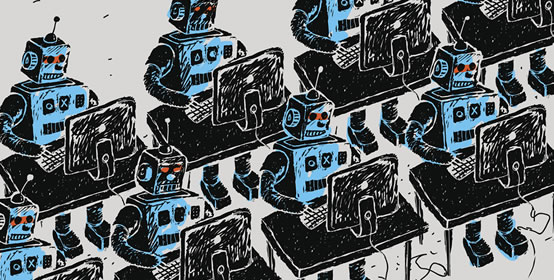
For decades, people have imagined a world where machines outthink humans. The idea of technological singularity, the moment artificial intelligence surpasses human intelligence, was once reserved for science fiction. In 2025, AI is no longer just a futuristic thought experiment. It is shaping how we work, shop, travel, and even receive healthcare.
The question is not whether AI will change jobs. It already has. The real debate is how far it will go and how societies can adapt to make the most of it.
In 2013, Oxford researchers estimated that nearly half of U.S. jobs could eventually be automated. At the time, that figure of 47 percent was shocking and widely debated. Many assumed that while machines would change factories, white collar jobs and service roles would remain safe. Twelve years later, we can see how much of that prediction has already come true.
Customer service lines are now handled primarily by AI chatbots that not only answer questions but also detect emotion in tone and respond accordingly. Translation apps rival professional linguists for everyday needs. Automated systems review insurance claims, underwrite loans, and even prepare taxes with surprising accuracy. In warehouses and fast-food restaurants, robots have taken over repetitive tasks that once required dozens of employees.
Yet most jobs have not disappeared entirely. They have evolved. Instead of vanishing, many roles are being reshaped, with AI taking over routine tasks and humans focusing on decision-making, creativity, and empathy. Doctors still treat patients, but AI now reads medical scans and helps identify illnesses more quickly. Teachers still guide classrooms, but AI tutors provide extra practice and personalized feedback for students. Accountants still prepare reports, but much of the data crunching is automated, leaving humans to focus on strategy and client relationships.
Transportation
Autonomous taxis already operate in select cities, offering rides without a driver behind the wheel. Long-haul trucking companies in the United States, China, and Europe are running pilot programs with AI-driven convoys. Logistics companies are preparing for a future where fleets of trucks drive themselves across highways while a single human supervisor monitors them remotely.
The consequences go beyond job loss. Transportation experts argue that widespread automation could dramatically reduce accidents, cut delivery costs, and reshape urban life. If fewer people own cars because shared self-driving fleets dominate, cities may reclaim parking lots and redesign roads. Still, for millions of professional drivers around the world, the shift threatens long-term livelihoods.
Healthcare
In healthcare, AI is no longer an add-on but an essential tool. Algorithms now scan X-rays and MRIs with accuracy levels that rival or surpass specialists. Hospitals use AI to predict patient risk, recommend treatment plans, and even anticipate surges in admissions. Chatbots already triage patients in primary care, answering questions and suggesting next steps before a doctor becomes involved.
Doctors are not disappearing, but their role is changing. They are moving from sole decision makers to partners who interpret AI outputs, provide oversight, and most importantly, deliver the human trust and empathy that machines cannot replicate.
Finance
Banking has undergone one of the fastest transformations. AI systems are now responsible for detecting fraud, automating trading strategies, and providing instant credit scoring. Robo-advisors handle investments for millions of users, offering low-cost alternatives to traditional financial planning. Human advisors are increasingly focused on complex cases, personal trust, and high-net-worth clients.
The risk is that traditional entry-level roles in banking, such as junior analysts or claims processors, are shrinking. For many who once started careers in these positions, the ladder is shorter and harder to climb.
Retail and Food Service
Walk into a modern fast-food restaurant and you may see robots preparing food while customers order from kiosks or apps. In grocery stores, self-checkout systems and cashier-less models powered by AI vision technology are expanding. Retail jobs, long a safety net for students and low-income workers, are under strain as companies embrace automation to cut costs.
However, not all is lost. Customer-facing roles that involve building loyalty, managing teams, or handling complex issues still depend on people. Stores that rely heavily on personal experience, such as high-end boutiques, continue to need staff.
Creative Work
Creative industries once felt insulated from automation. Yet in 2025, generative AI is producing advertising copy, graphic designs, music tracks, and even screenplays. Companies now use AI to handle first drafts or generate options that humans then refine. Artists and writers remain essential, but their roles are shifting toward guiding, editing, and ensuring originality rather than producing every piece from scratch.
The challenge for creatives is not whether AI can make art, but how humans can distinguish their work and maintain value in a market flooded with machine-made content.
The rise of AI raises a difficult question: what happens to the workers who are left behind?
The World Economic Forum estimated that over 80 million jobs could be displaced by 2025, even as nearly 100 million new ones are created. The problem is not just the numbers. It is the mismatch. The jobs being lost are not the same as the jobs being created.
Warehouse staff cannot easily transition into roles in AI oversight or machine learning without years of training. Taxi drivers cannot instantly become data scientists. As a result, whole groups of workers risk being stranded in low-skill, low-wage positions.
Economists warn that unemployment could rise, especially among younger workers who depend on entry-level positions to gain experience. A Stanford study has already found that employment among young professionals in AI-exposed jobs has declined. For a generation just beginning their careers, the stepping stones are disappearing.
The pace of change has left governments and businesses scrambling. Some tech leaders, including Elon Musk and Sam Altman, argue that universal basic income will become necessary. If machines handle most of the work, societies may have to provide people with a guaranteed income simply to keep economies functioning.
Others propose different solutions. Bill Gates has floated the idea of a “robot tax” on companies that replace human workers with machines, using the funds to support social programs. Policy experts like Mathew Burrows suggest requiring a minimum number of human employees in factories or service industries to prevent full automation.
At the same time, education systems are under pressure. Schools and universities are racing to update curricula with digital skills, AI literacy, and lifelong learning pathways. Governments and corporations are investing in retraining programs, but these efforts face hurdles. Not every worker has the resources, time, or ability to transition into high-tech roles. For many, the promise of reskilling feels distant and inaccessible.
For individuals, adaptability has become the most valuable skill. Jobs that rely on problem-solving, leadership, creativity, and empathy remain more secure. Workers who can embrace new tools and learn continuously are in demand across industries.
Despite the disruption, AI is not purely a threat. It carries extraordinary benefits if managed wisely.
Some optimists argue that AI could liberate people from monotonous labor. If machines take over repetitive work, humans could spend more time on creativity, caregiving, and pursuits that provide deeper meaning.
The challenge is managing the transition fairly. Without safeguards, the AI job shift could widen inequality and concentrate wealth in the hands of a few companies. With thoughtful policies, it could usher in an era where people live better lives with machines as partners.
AI is not slowing down. In just the past five years, systems like GPT, autonomous vehicles, and advanced robotics have moved from labs into everyday life. The line between human and machine work grows thinner each year.
Society now faces a choice. Do we allow automation to hollow out the workforce without support, or do we design policies and education systems that ensure humans remain central to the future of work?
The original Oxford study warned that nearly half of jobs were at risk. In 2025, we no longer need warnings. We are living through the reality. The AI job shift is underway. The question is not if it will reshape industries. The question is how we will respond.