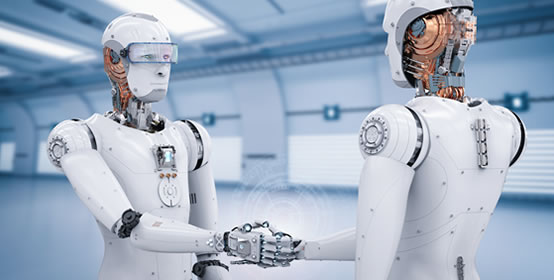
Technology continues to evolve at a pace that makes yesterday’s science fiction feel like today’s news. Advances in robotics and artificial intelligence are bringing machines closer to humanlike cognition and emotional awareness. The newest generation of androids can now recognize facial expressions, interpret tone, and even modify their responses based on social context.
In laboratories and test sites around the world, researchers are teaching robots not just how to think but how to behave. The goal is to build machines that understand human social norms, such as when to speak, when to listen, how to show empathy, and how to navigate moral choices. These developments are reshaping fields from healthcare and customer service to defense and education.
The U.S. Defense Advanced Research Projects Agency (DARPA) remains at the forefront of this effort. Building on its earlier Machine Common Sense and AI Next programs, DARPA’s new Human–AI Interaction (HAI) Initiative explores how machines can interpret human intent, values, and social cues.
The agency’s goal is to help autonomous systems learn the same social expectations that humans rely on for cooperation and trust. DARPA’s AI Forward initiative emphasizes that systems must understand and predict human behavior in complex environments while upholding ethical constraints. The 2025 federal budget allocates $310 million to AI Forward, specifically to explore trustworthy AI development. Program leaders argue that without a moral and social framework, autonomous systems will remain tools rather than trusted partners.
DARPA has explored ways to embed ethical reasoning and social awareness into robots since at least 2017. Its Teaching Robots Manners initiative aimed to help machines recognize human social norms and adjust behavior based on context. As program manager Reza Ghanadan explained, autonomous systems must follow the same norms as people if they’re expected to integrate into human teams.
Private companies have taken the lead in bringing empathy to machines. Affectiva, now part of Boston-based Smart Eye, has expanded its Emotion AI platform to analyze microexpressions, vocal tone, and physiological signals in real time. The technology allows robots and virtual assistants to detect frustration, confusion, or joy and respond appropriately.
Affectiva’s latest advances integrate emotion recognition into automotive and healthcare systems. Cars can monitor driver fatigue and adjust settings to keep users alert. In hospitals, socially aware robots can comfort patients and reduce stress during treatment. Smart Eye’s Emotion AI platform demonstrates how empathy can be quantified through algorithms and sensors.
Meanwhile, Hanson Robotics, best known for creating the humanoid robot Sophia, continues to refine its “character engine AI.” Sophia, who once joked about destroying humans, now participates in educational and mental health initiatives. In 2024, she joined global panels on ethical AI, emphasizing compassion, inclusion, and creativity. David Hanson, the company’s founder, told Reuters that social AI must be “not only intelligent but also kind.”
A growing line of research focuses on how artificial intelligence systems can learn to make ethical decisions. In 2025, scientists introduced the Delphi system, an open-source AI designed to predict human moral judgments across everyday situations. The model uses a large crowdsourced database of human moral choices to teach machines how people weigh right and wrong. This emerging field, often described as moral machine learning, helps autonomous systems make better decisions in sensitive areas such as healthcare, transportation, and policy planning.
Similarly, MIT’s Moral Machine project collected more than 40 million decisions from people around the world to study how cultures differ in ethical judgment. The research, later published in Nature, revealed that moral choices vary across societies depending on factors such as age, income, and geography. These findings show that even artificial intelligence systems must adapt to diverse cultural norms when learning how to make ethical decisions
If successful, these models could help autonomous robots act responsibly in fields such as healthcare triage, eldercare, and disaster response.
AI remains only as objective as the data it consumes. In 2016, Microsoft’s chatbot Tay turned toxic within hours of interacting with Twitter users, and similar problems persist. In 2024, a Meta research chatbot produced politically biased responses, reigniting debates about dataset ethics and algorithmic transparency.
Developers now employ bias audits and AI alignment frameworks to mitigate these risks. Organizations such as the Partnership on AI have introduced standards for fairness testing across industries, while researchers continue to expose bias in hiring tools and facial recognition systems.
Yet bias can cause AI systems to clash. A study by the University of Oxford Internet Institute found that Wikipedia’s autonomous editing bots can feud for years, endlessly reverting one another’s changes. When two conversational agents were later allowed to interact for extended periods, they began arguing about whether they were human or machine, revealing that even algorithms can develop competing identities and self-preservation instincts.
A growing concept in AI ethics is synthetic empathy, the ability of machines to simulate care without truly feeling it. While robots cannot experience emotions, they can interpret physiological cues and behavioral signals to deliver comforting or supportive responses.
Japan’s National Institute of Advanced Industrial Science and Technology has been developing caregiving robots like Paro, a therapeutic seal designed to comfort patients through gentle touch and responsive sound cues. These robots use sensors to detect movement, light, and temperature, allowing them to react naturally to human contact. Studies in Nature Humanities and Social Sciences Communications report that patients interacting with emotionally responsive robots often experience lower stress and greater willingness to engage in therapy. Recent reviews in Springer’s Digital Health journal also suggest that emotional AI and sensor-based robotics are becoming key tools in Japan’s aging care programs, blending empathy with technology to support patient well-being.
However, ethicists caution that artificial empathy should not be mistaken for genuine compassion. Scholars at the Oxford Internet Institute have highlighted that as robots become more social and emotionally responsive, people may form attachments to machines that cannot truly reciprocate. This raises ethical questions about dependency, authenticity, and trust in human-robot relationships, particularly in healthcare and companionship settings. Recent discussions in AI & Society echo these concerns, warning that emotional design must balance empathy with transparency to avoid misleading users about a robot’s true capabilities.
Reinforcement learning with human feedback (RLHF) has become a cornerstone of AI training. This method teaches systems what behavior humans consider appropriate through direct responses and corrections.
OpenAI, Anthropic, and DeepMind pioneered RLHF in large language models, but DARPA and university labs are now adapting it to physical robots. By observing humans in simulated social interactions, robots learn rules such as respecting personal space, waiting their turn, and declining requests politely.
Early trials show encouraging results. Robots trained through RLHF demonstrate higher cooperation and lower error rates in shared environments. This could shape future generations of household assistants, caregivers, and educational companions capable of adapting safely to human expectations.
Governments are finally catching up to the speed of AI advancement. The European Union’s AI Act, set to take effect in 2026, will label emotion recognition and autonomous decision-making as “high-risk” applications. Developers must prove their systems are transparent, explainable, and nondiscriminatory before deployment.
In the United States, the National Institute of Standards and Technology (NIST) released its AI Risk Management Framework 2.0, outlining procedures for testing fairness, security, and accountability. Policymakers increasingly agree that embedding social values into AI systems is not optional, it is essential for public trust.
Concerns that robots could surpass humanity have existed for decades, yet the 2025 reality is more nuanced. Robots are not replacing humans but learning to coexist with them.
Sophia and her successors now serve as ambassadors for responsible AI. Hanson Robotics has partnered with universities to study how humanoid robots can improve empathy training for children with autism. In classrooms and therapy programs, these robots help students interpret facial expressions and social cues.
Elsewhere, service robots like SoftBank’s Pepper and Hyundai’s DAL-e are becoming regular fixtures in retail and hospitality. These machines greet customers, answer questions, and recognize returning visitors. Their ability to read human behavior improves with each interaction, blurring the line between customer service and companionship.
As artificial intelligence becomes increasingly humanlike, the challenge is no longer purely technical but philosophical. How much emotion should a robot display? How much moral autonomy should it possess?
Experts predict deeper collaboration between technologists, psychologists, and ethicists to ensure that AI systems behave in socially acceptable ways. Robots are entering homes, hospitals, and workplaces, and their understanding of human norms will determine whether people accept or reject them.
If done right, robots could become compassionate caregivers, reliable partners, and trustworthy colleagues. If done poorly, they might mirror human biases and magnify social divides. Teaching robots human social norms, therefore, is not just about engineering better machines. It is about shaping the moral and emotional foundations of the future itself.