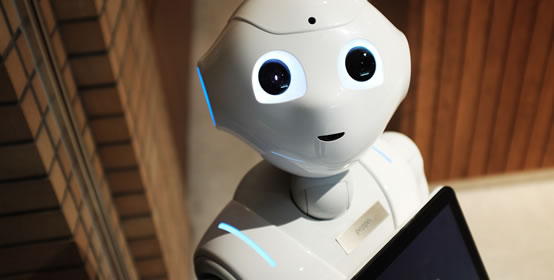
Technology continues to evolve and progress at a rapid pace. What once seemed experimental or theoretical is now becoming functional, accessible, and in some cases, essential. New innovations are reshaping industries such as the military, space, healthcare, manufacturing, and transportation; areas that might otherwise risk stagnation without continued advancement.
While some of today’s most promising inventions have not yet reached the consumer market, their very existence indicates that the world is on the verge of meaningful and lasting change.
The following emerging technologies are among those most likely to influence how people live, work, and interact in the coming years.
In recent years, scientists have successfully created embryo-like structures in animal models using only stem cells. These synthetic embryo models are not created for reproduction. Instead, they are developed to help researchers better understand early biological processes; how organs form, how diseases begin, and why certain pregnancies may not develop normally.
This work has led to advances in fertility research, congenital condition prevention, and regenerative medicine. By 2026, this field has expanded into a specialized branch of science known as developmental bioengineering, where researchers simulate early life patterns to unlock new medical treatments.
Of course, the ethical debate surrounding this technology continues. Critics argue that even non-viable embryo-like structures deserve moral consideration. Supporters contend that clearly defined regulations and strict oversight ensure that this research serves a single, focused purpose: improving health outcomes and saving lives.
Rather than replacing traditional human reproduction, this technology is helping scientists better protect and support it.
Three-dimensional display technology has evolved significantly in recent years. What was once a novelty has now become a functional tool in medicine, design, and engineering. In 2026, light-field and holographic-style displays allow users to view fully immersive three-dimensional objects without the need for special glasses or headsets.
These displays enable surgeons to examine complex anatomy in real space before performing procedures. Engineers walk around full-scale prototypes before building them. Architects visualize structures in real environments before construction begins.
The result is a more natural and intuitive way to interact with digital content, one that may soon make traditional flat screens feel outdated.
As this technology becomes more affordable and accessible, it has the potential to change how people work, learn, and consume information.
Early genetic testing services focused mainly on ancestry and limited health traits. By 2026, genomic science has become far more advanced. Today’s researchers can analyze complex genetic patterns and identify risk factors for illness, food sensitivities, medication reactions, and even certain behavioral tendencies.
In the future, children may be given a genomic wellness profile shortly after birth. These profiles are not designed to define a child’s destiny, but rather to serve as a guide and help parents and physicians make informed decisions about nutrition, lifestyle, and preventative care.
As powerful as this technology is, it also raises questions about privacy, data security, and personal autonomy. In response, tighter regulations and ethical frameworks are being developed to prevent the misuse of genetic information.
When used responsibly, this technology has the potential to move healthcare from reactive to truly preventative.
Three-dimensional printing is no longer limited to plastic prototypes. By 2026, advanced printers can create objects using metal alloys, ceramics, polymers, and conductive materials in a single process.
This breakthrough allows manufacturers to produce fully functional parts, complete with internal structures, wiring pathways, and layered strength, all in one print. The impact on industries such as aviation, automotive, construction, and medical devices is significant.
Instead of relying on distant factories and long supply chains, companies and communities can produce specialized parts locally and on demand. This reduces waste, lowers costs, and shortens production timelines.
What was once considered futuristic is fast becoming a standard method of production.
Artificial intelligence has expanded far beyond basic automation. In 2026, AI systems are capable of analyzing vast quantities of information, identifying complex patterns, and generating innovative design solutions at unprecedented speed.
Engineers now use generative AI to explore thousands of design possibilities in minutes. Healthcare providers deploy AI to detect disease in its earliest stages. Urban planners rely on intelligent systems to optimize traffic flow, energy use, and infrastructure.
Autonomous machines, from agricultural vehicles to delivery systems, are becoming more common, particularly in environments that are dangerous or difficult for humans to access.
Rather than replacing human intelligence, these systems function as powerful tools, allowing people to make better, more informed decisions.
Quantum computing, once confined to theoretical physics, is now beginning to show practical applications. These computers can process massively complex calculations in a fraction of the time required by traditional systems. This ability may revolutionize cryptography, climate modeling, pharmaceutical research, and advanced material design.
At the same time, breakthroughs in fusion technology, hydrogen power, and long-duration energy storage are working to reshape the way the world produces and consumes energy. These emerging systems could provide cleaner, more stable power while greatly reducing environmental impact.
Although full-scale implementation may still require time, the groundwork has been firmly laid.
Taken together, these advances reveal a common theme: the future is not simply about faster machines or smaller devices, but about smarter, more intentional systems.
The world is moving toward a model built on efficiency, sustainability, and adaptability. Technology is no longer just supporting life, it is actively shaping how civilization evolves.
How these powerful tools are used, and who controls them, will ultimately determine the world that emerges from this next wave of innovation.