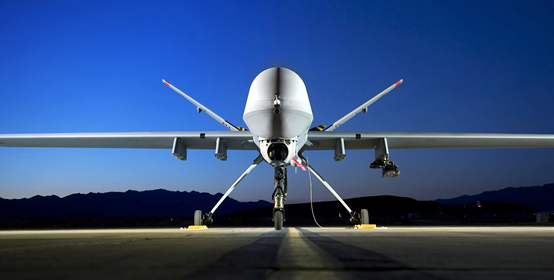
The evolution of Unmanned Aerial Vehicles (UAVs) is progressing at an exceptional pace, impacting both military and civilian sectors. Their capabilities are expanding as UAVs become more sophisticated and integrated into the airspace alongside manned aircraft. This includes advances in automation, endurance, payload capacity, and mission versatility. Innovations are occurring across various domains, particularly in the development of armed UAVs and detect-and-avoid systems, shaping the future of drone technology.
The United States has been at the forefront of UAV usage in warfare, with significant developments that have shaped the global landscape of military drone capabilities. The first major exposure to armed drones came when the Israel Air Force showcased a weaponized UAV during the 1982 Lebanon War. The Israeli UAV, called the Pioneer, served as a proof of concept, demonstrating the potential for UAVs to conduct surveillance, reconnaissance, and combat operations. This laid the groundwork for the U.S. military to invest in UAV technology, leading to the creation of some of the most advanced drones in the world today, including the MQ-1 Predator and MQ-9 Reaper.
The MQ-9 Reaper stands as one of the most advanced UAVs, primarily used for precision strikes and intelligence gathering. Equipped with state-of-the-art surveillance equipment, it is capable of carrying out missions remotely, minimizing human risk. Its long endurance and high operational ceiling allow it to provide continuous support for military operations.
Recently, UAV developments have extended beyond surveillance to incorporate high-precision weaponry, such as laser-guided bombs and Hellfire missiles. These additions enhance the effectiveness of drones in real-time combat situations, enabling military forces to conduct targeted strikes with increased accuracy and reduced collateral damage.
One of the cutting-edge UAVs in the military sector is the Gray Eagle, a high-altitude and long-endurance UAV with a 1,075 lb payload. Its capabilities in reconnaissance, search-and-destroy missions, and close air support make it indispensable in modern warfare. As global security needs evolve, these UAVs are poised to further redefine military strategies.
New in 2025, Taiwan has developed autonomous “suicide” drones, dubbed Overkill, equipped with AI targeting systems for tanks and naval units. India has tested its first AI-lethal drone armed with an AK-203 rifle. Meanwhile, the U.S., France, and Australia are testing “wingman” drones to accompany manned jets—Anduril’s Fury, Boeing’s Ghost Bat, and GA’s YFQ‑42A are notable examples. Both Russia and Ukraine are mass-producing fiber-optic guided loitering munitions, which are resistant to jamming and used for precise, long-range strikes.
Most UAVs are limited by battery capacity, with commercial drones typically offering only a few hours of flight time. However, the military's need for longer endurance has prompted significant innovation in this area. Bye Aerospace, in partnership with SolAero Technologies, has created a new class of solar-powered UAVs capable of staying in the air indefinitely. By incorporating high-efficiency solar cells, they produce energy at high altitudes and cold temperatures, significantly boosting the operational time of UAVs.
This solar-powered UAV technology is opening up new possibilities for both military and civilian applications. With 15-meter wingspans, these UAVs can perform continuous surveillance, reconnaissance, and communication tasks without needing to land for refueling. This innovation could transform industries like agriculture, environmental monitoring, and disaster response, where long-duration flights are critical.
In 2025, the UK’s PHASA-35, a solar-powered high-altitude UAV with a 35-meter wingspan, demonstrated multi-month endurance potential, expanding options for climate monitoring and persistent communications. China’s CH-YH1000, a cargo UAV with a 1-ton payload and 10-hour range, completed testing, hinting at the scalability of UAV logistics. Tethered drones also gained ground for long-duration monitoring, powered continuously from ground sources.
Despite the increasing sophistication of UAV technology, the regulatory environment continues to be a challenge. One of the key obstacles is the line-of-sight (LOS) regulation, which requires UAV operators to maintain a direct visual connection with their drones during flight. This limitation has hindered many commercial applications, particularly in areas like package delivery, surveillance, and infrastructure inspection.
However, advances in detect-and-avoid (DAA) technologies are paving the way for Beyond Visual Line of Sight (BVLOS) operations. A prime example of such a system is FlightHorizon, developed by Vigilant Aerospace. This system uses advanced sensors, including radar and optical cameras, to track other aircraft in real-time. By processing this data using machine learning algorithms, FlightHorizon provides warnings about potential collisions and automatically adjusts the UAV’s course to avoid them.
These technologies integrate seamlessly with existing air traffic control systems, allowing UAVs to operate safely and efficiently in shared airspace with manned aircraft. With such systems in place, the possibility of BVLOS missions is becoming more practical, opening new opportunities for UAVs to be used in commercial sectors, such as e-commerce, agriculture, and urban air mobility. In 2025, FAA waivers enabled a surge in drone-as-first-responder (DFR) programs across the U.S., where drones now assist in emergencies, often arriving before ground teams.
1. Autonomous Navigation and Obstacle Avoidance
AI is revolutionizing how UAVs navigate and interact with their environments. Machine learning algorithms enable UAVs to process real-time data from multiple sensors (cameras, LiDAR, radar) to detect obstacles in their path. By integrating deep reinforcement learning techniques, UAVs can optimize flight paths to avoid collisions while considering terrain, weather conditions, and other aircraft. This advancement ensures safe autonomous flight even in cluttered or complex environments.
For example, Skydio, a leader in AI-powered drones, has developed self-flying drones capable of navigating around trees, buildings, and other obstacles with minimal human input. This technology is not only enhancing UAV safety but also expanding their use in urban environments, where traditional manual piloting would be insufficient.
2. Advanced Detect-and-Avoid Systems
As UAVs share airspace with manned aircraft, detect-and-avoid systems powered by AI and ML are critical for ensuring collision avoidance. These systems process data from multiple sensors and predict potential hazards based on machine learning models. The goal is for UAVs to make real-time decisions to avoid collisions autonomously.
The integration of these systems with air traffic management systems is vital for the future of UAV operations. This allows UAVs to interact with other aircraft and ground control operations while maintaining safety protocols. Vigilant Aerospace’s FlightHorizon, mentioned earlier, is one example where AI is used to track surrounding aircraft and provide collision warnings in shared airspace, further solidifying the viability of UAVs for BVLOS missions.
3. Enhanced Target Recognition in Military UAVs
AI’s application in military UAVs extends to target recognition and classification. Advanced algorithms allow UAVs to autonomously identify and engage targets with precision, even in crowded battlefields. This use of AI ensures that military UAVs can carry out surveillance and precision strikes while minimizing the risk of collateral damage.
The MQ-9 Reaper, for instance, employs AI-driven target identification systems that can quickly analyze and classify objects in real time, distinguishing between combatants and non-combatants. These advancements reduce the need for human operators to be directly involved in every decision, improving efficiency and minimizing human error.
4. Real-Time Decision Making and Mission Planning
AI and machine learning are also transforming mission planning. UAVs can now analyze a combination of environmental factors, mission goals, and real-time data to autonomously plan the most efficient flight path. This can be crucial in dynamic environments where weather conditions, no-fly zones, and unexpected threats may alter mission parameters.
For instance, UAVs used in disaster relief or search-and-rescue operations can adapt in real time, recalculating flight plans based on new inputs, such as building collapses or shifting weather patterns. This autonomous mission planning increases the efficiency and safety of drone operations.
5. Multi-UAV Coordination and Swarming
In complex operations, multiple UAVs can work together, coordinating their actions autonomously. Swarming technologies powered by AI allow UAVs to collaborate on missions, such as surveillance, environmental monitoring, or search-and-rescue. Each UAV can communicate and share data with others in the swarm, ensuring optimal coverage and reducing the chances of missing crucial information.
AI-driven multi-UAV coordination is especially useful in military operations, where coordinated UAVs can conduct broad-area surveillance, target identification, and even combat operations. The U.S. Department of Defense has been experimenting with swarming UAVs to conduct large-scale operations in a coordinated and efficient manner.
6. Ethical and Regulatory Considerations
The integration of AI into UAV operations raises significant ethical concerns, particularly in military applications. Autonomous decision-making systems must be designed to comply with international laws of armed conflict and ethical guidelines regarding the use of force. Accountability is paramount, and as AI assumes a more significant combat role, regulatory frameworks will need to be adapted to ensure that AI-driven decisions are transparent, verifiable, and ethical.
Organizations like the U.S. Department of Defense are working on AI ethics guidelines to ensure UAV operations are aligned with international laws and humanitarian principles. Furthermore, AI's integration into UAVs brings about privacy concerns in civil sectors, particularly with surveillance drones. Regulatory bodies will need to balance safety, privacy, and accountability to ensure that AI-powered UAVs do not overstep ethical boundaries.
As UAVs grow in sophistication, regulators are facing the challenge of balancing innovation with safety. While FAA regulations have opened the door for beyond-visual-line-of-sight (BVLOS) operations, EU aviation safety standards continue to evolve to address safety concerns, privacy issues, and airspace management.
Both the FAA and EASA are working toward more streamlined, flexible regulations that will allow for greater UAV integration into the national and global airspace while prioritizing safety. The focus remains on ensuring that UAVs can operate seamlessly alongside manned aircraft in both military and civilian environments.
In 2025, regulatory frameworks began to adapt. The FAA’s DFR expansions and Europe's unified drone corridors signal an era where safety, automation, and operational freedom increasingly converge.